
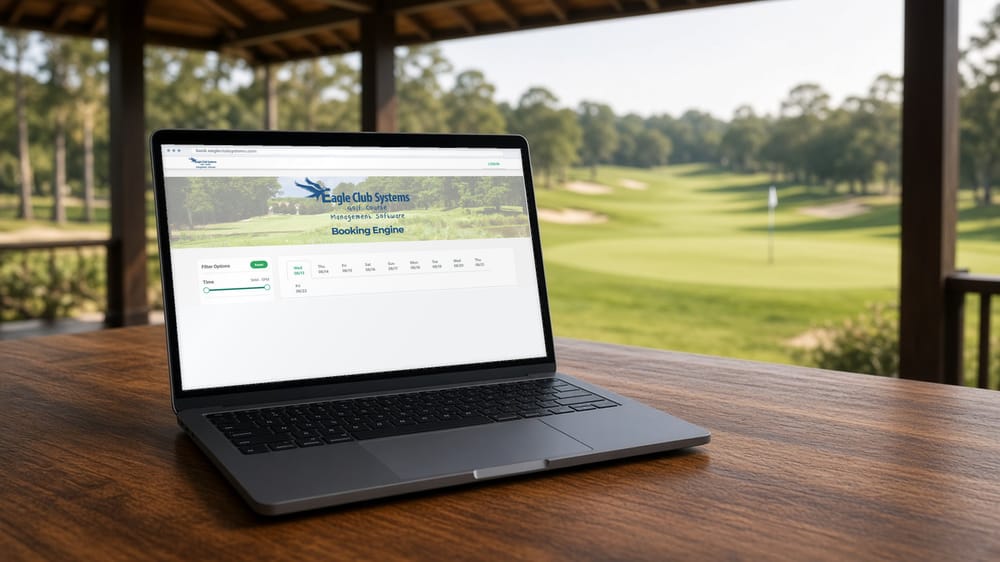
A busy Saturday morning phone is not a sign that your tee sheet is healthy. Half the time, it is a sign that golfers cannot book easily on their phone, members are confused about their booking window, or your staff is fixing a mismatch between an online reservation tool and the register at the counter.
Across more than 24 years in golf operations — and working with hundreds of public, semi-private, private, and municipal courses across the U.S. and Canada — I have watched online booking do two opposite things. Done right, it cuts phone traffic, captures clean player emails and mobile numbers, and fills shoulder times you used to leave open. Done wrong, it double-books groups, leaks your best inventory to third-party marketplaces, and frustrates regulars.
This guide pulls together what actually matters in golf booking software: the operational features worth checking, how to launch without chaos, and how to own your golfer data instead of renting it back.
Here is a typical week at a course that just turned on online booking without tightening the rules. Twilight rates are appearing in the morning window, members are calling because a public guest booked inside the member-only advance window, and the phone is ringing with people who already tried to book online and got the wrong price. Staff spend the afternoon fixing reservations instead of helping the golfers who are already on the property.
Booking software is a tee-sheet and POS decision, not a website widget
Too many courses shop for online booking as a bolt-on button for their golf course website. Then they discover the booking widget lives in one vendor’s database while the counter register lives in another.
When the booking engine is built directly on top of the golf tee sheet software and connected to the golf course POS system, three problems disappear immediately:
- No lag between web and shop. When a golfer books 9:10 a.m. on their phone, that slot disappears from the shop screen and every other channel at the exact same moment.
- Rates and player rules stay consistent. Member windows, resident rates, cart inclusion, and twilight pricing match what your staff sees at check-in.
- The customer record stays intact. Every golfer who books online lands in your CRM with play history, contact details, and payment status attached — ready for check-in, F&B tabs, and future outreach.
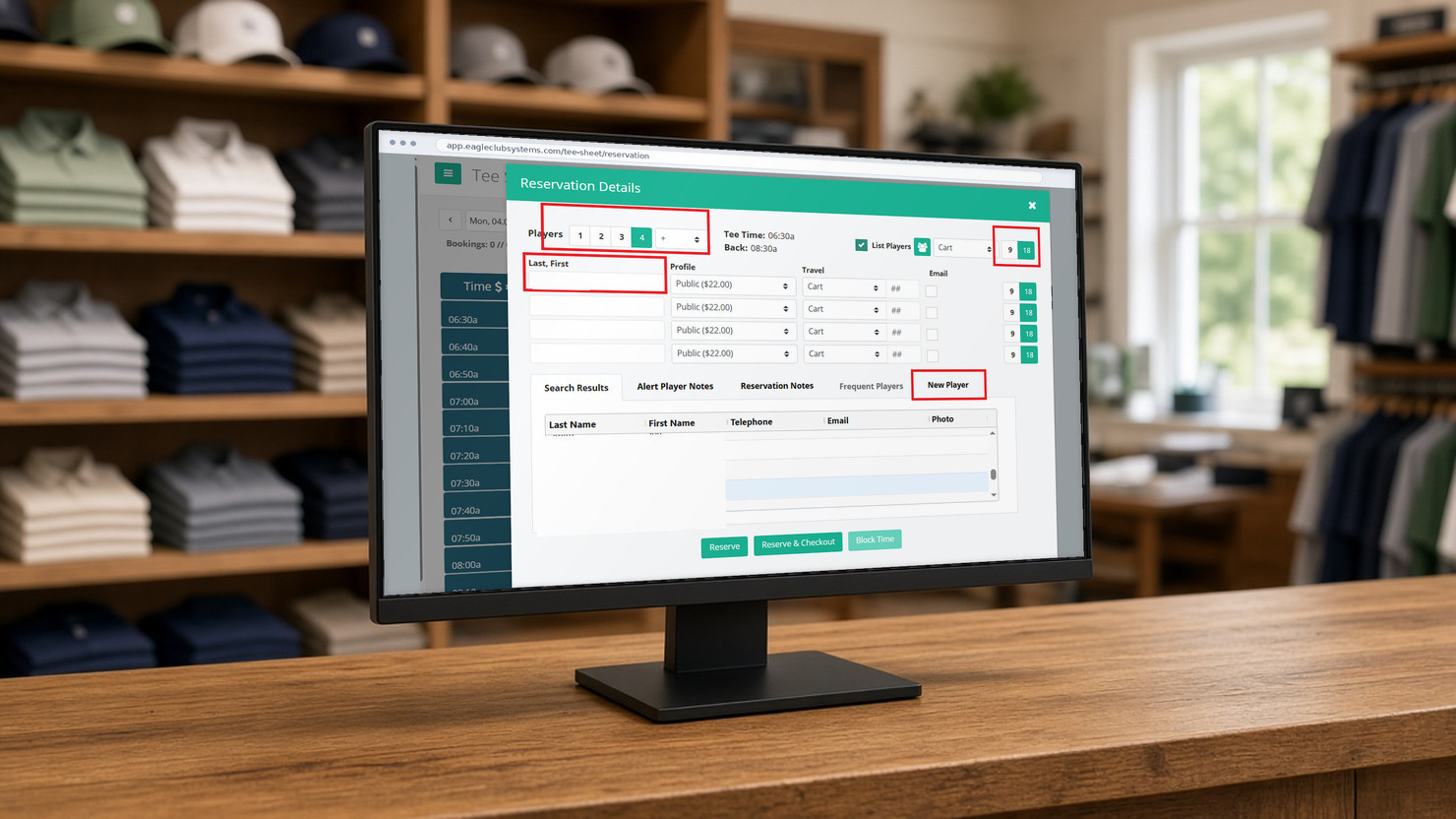
The online booking features that actually protect your operation
Ignore flashy marketing badges during a demo and test these six operational controls:
1. Mobile-first booking with minimal friction
More golfers book from their phone in a parking lot or on a lunch break than from a desktop computer. Test the full flow yourself on a phone: pick a day, pick 9 or 18 holes, choose 1–4 players, review the total price transparently, and confirm without pinching, zooming, or hunting for hidden buttons.
2. Granular booking windows and player restrictions
Members, season-pass holders, residents, and public guests rarely share the same booking privileges. You should be able to set advance booking windows by player classification, enforce minimum player counts on prime weekend mornings (for example, no singles booking alone into peak Saturday slots unless paired), and separate 9-hole vs. 18-hole eligibility by time of day.
3. Flexible payment rules: prepaid, card-hold, or pay-at-course
Different times of day carry different risk. You might require prepayment or a credit-card hold for prime weekend mornings to cut no-shows, while leaving quiet Tuesday afternoons as pay-at-course so casual players do not bounce at checkout. Make sure your booking software supports both on the same sheet — and check how refunds or rain checks flow back through your reports.
4. Direct discovery through Reserve with Google
Most golfers start their search on Google or Google Maps, not by typing a course’s full URL. Eagle Club Systems integrates with Google’s Appointment Redirect (Reserve with Google), so golfers searching for a tee time near them can click straight from Google into your own booking flow rather than getting funneled into a third-party marketplace listing.
5. Booking-funnel analytics, not just completed counts
Most booking engines only tell you how many rounds finished. They do not tell you how many golfers opened the calendar, saw a rule or fee, and walked away.
In our Google Analytics and booking engine guide and our Thorn Apple Country Club case study, we documented how Thorn Apple moved off a paper tee sheet and basic cash register onto Eagle Club Systems and watched booking conversion directly in GA4. When they introduced a credit-card-hold policy, checkout abandonment initially ran around 25% before settling down to roughly 15%, while online booking climbed from virtually zero to 20%, then 40%, and eventually became how the majority of their rounds were booked. That visibility lets you adjust policies from real behavior instead of guessing.
6. Direct control vs. third-party barter marketplaces
Think carefully before trading prime tee times for software or exposure. As we break down in What Barter Actually Costs You and Eagle Club Systems vs. GolfNow, third-party marketplaces often own the customer relationship, market competing courses to your players, and train price-sensitive golfers to wait for discounted “hot deals.” With direct golf booking software, you set your rates, keep 100% of the green fee, and own the customer data.
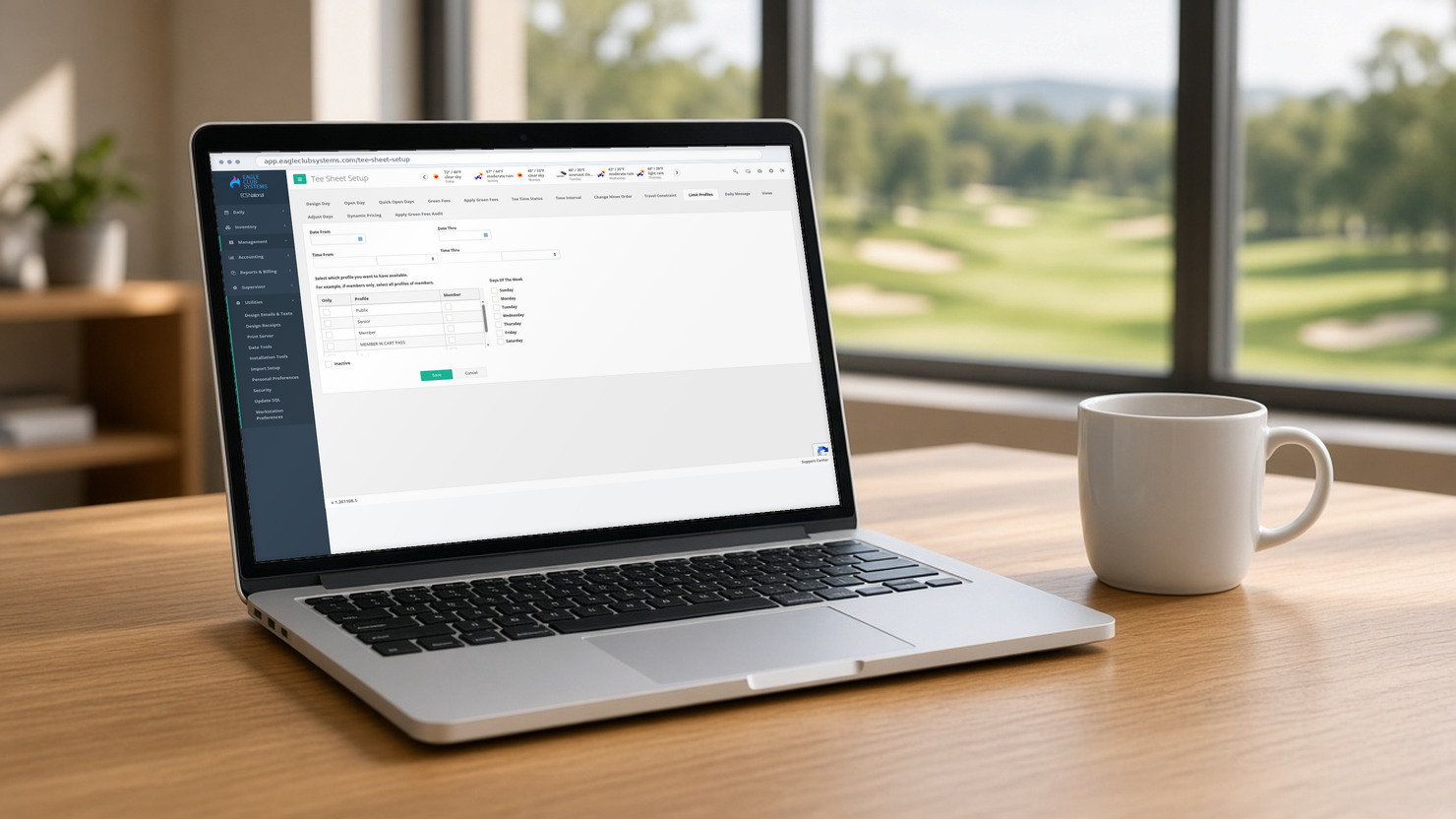
How to launch online booking without overwhelming your staff
Switching on online booking does not require turning off the phone overnight. Follow a clean rollout order:
- Clean up your rate sheet and rules first. Simplify confusing public rate tiers, confirm cart-included vs. walking options, and lock in member vs. public advance windows before anyone outside sees the page.
- Test every exception on staging or with staff. Book a foursome from a phone, cancel one player, move a time on the tee sheet, check in a prepaid golfer, and issue a rain check so the counter team sees every step before opening day.
- Train the shop team on the “same answer” rule. If a golfer calls asking for a rate or time, staff should look at the exact same live inventory the website shows — and gently point callers to the direct booking link for faster future reservations.
- Put your direct booking link everywhere golfers look. Top navigation button on your site, Google Business Profile booking link, voicemail greeting (“Book anytime at…”), scorecard QR codes, and pro shop counter signage.
- Measure the first 30 days in GA4 and your close reports. Watch where players drop off, which days fill first, and whether phone volume shifts to more profitable counter service.
What to verify before you sign
Before choosing any golf booking software, confirm these four practical details in writing:
- Are there per-round booking fees or barter tee times? Know the real cost per reservation and whether your pricing integrity stays in your hands.
- How are leagues and outings handled? On Eagle Club Systems, tournaments and leagues run through Golf League Guru and Golf Outing Guru alongside the tee sheet rather than as a native module — confirm how recurring blocks look to online bookers.
- What happens if shop internet drops? Eagle Club Systems is cloud-based and requires an internet connection; keep a mobile hotspot or LTE failover ready so counter staff stay synced with live web bookings.
- Who converts your data and trains your team? Implementation and data conversion are included at no charge on Eagle Club Systems, with no long-term contracts, and most courses go live in under two weeks after data is provided.
If you want to test a full mobile booking flow side-by-side against your current system, book a demo or call +1 727-433-8707. Bring your rate sheet and booking rules, and we will walk through the golfer and shop experience live.
FAQ
What is golf booking software?
Golf booking software is the online reservation engine golfers use to view open tee times, see pricing, and book rounds from a phone or computer. When built inside your tee sheet and golf POS, reservations update inventory in real time and stay linked to customer records and reporting.
Should online booking be separate from our tee sheet and POS?
No. Separate booking widgets that sync in batches cause double bookings, rate mismatches, and duplicate customer records. Look for golf booking software that shares one live database with your tee sheet, POS, and membership accounts.
Can golfers book tee times directly from Google?
Yes. Eagle Club Systems integrates with Google’s Appointment Redirect (Reserve with Google), allowing golfers to start bookings directly from Google into your own booking workflow without going through a third-party marketplace.
Should we require prepayment or a credit-card hold for online tee times?
That depends on demand by day and time. Many courses use a credit-card hold or prepayment on peak weekend mornings to prevent no-shows while keeping slower weekday afternoons pay-at-course. Your booking software should support both rules on the same sheet.
How do we track whether online booking is working?
Look beyond completed tee times. Connect Google Analytics 4 to your booking engine so you can measure checkout abandonment, booking conversion rates, and traffic sources — just as Thorn Apple Country Club used GA4 to monitor card-hold abandonment and online booking adoption.
Does Eagle Club Systems take barter tee times or lock courses into long-term contracts?
Eagle Club Systems states there are no long-term contracts and emphasizes direct course control over rates, inventory, and customer data rather than surrendering tee times to third-party barter marketplaces. Confirm all processing and platform terms in a written proposal.