A private club can have a beautiful tee sheet and still fail the only tests that matter to members: could someone who is not a member take that time, and does the statement match what was actually charged? Country club and private golf club management software has to get both right — access and the bill — on the same record.
I have spent more than 24 years in golf operations, including plenty of time around how private and semi-private clubs actually run a members’ morning and a month-end. There is no dedicated private-club product page on our site, because the same platform serves public, private, daily-fee, semi-private, and municipal facilities. The difference is in the rules you set. This guide is what I would insist on seeing if I were on the club’s side of the table.
Picture a members’ morning in June. The club has held 7:00 to 9:00 a.m. for members. A public golfer still finds a way to request one of those times online, a spouse charges breakfast to the household, and later that month the statement either misses the meal or lists it under the wrong person. None of that is a “nice to have” report. It is why members call the office.
Member access has to be a rule, not a staff reminder
Private clubs live on restricted inventory. Member times, guest-with-member policies, and family play windows cannot depend on whoever answers the phone.
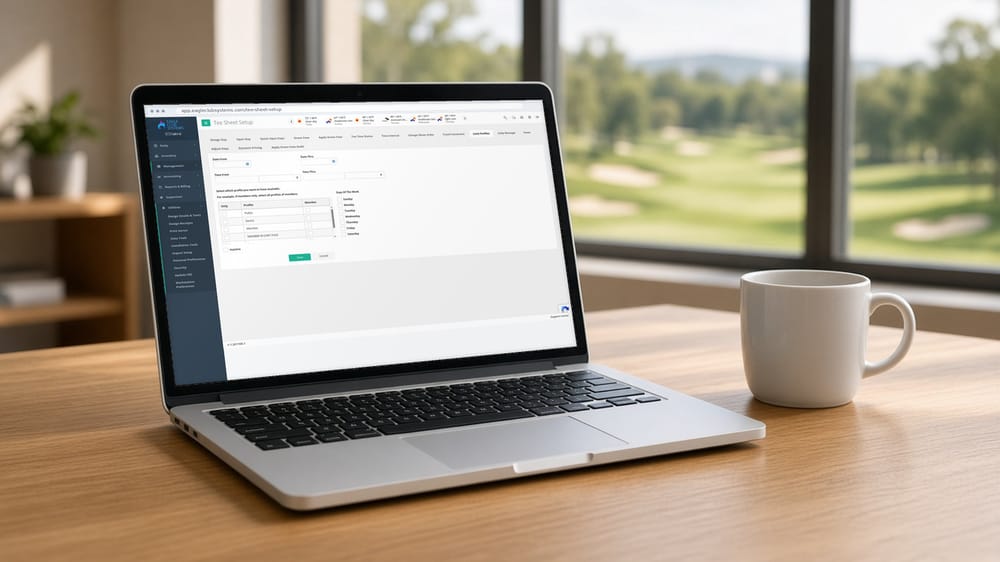
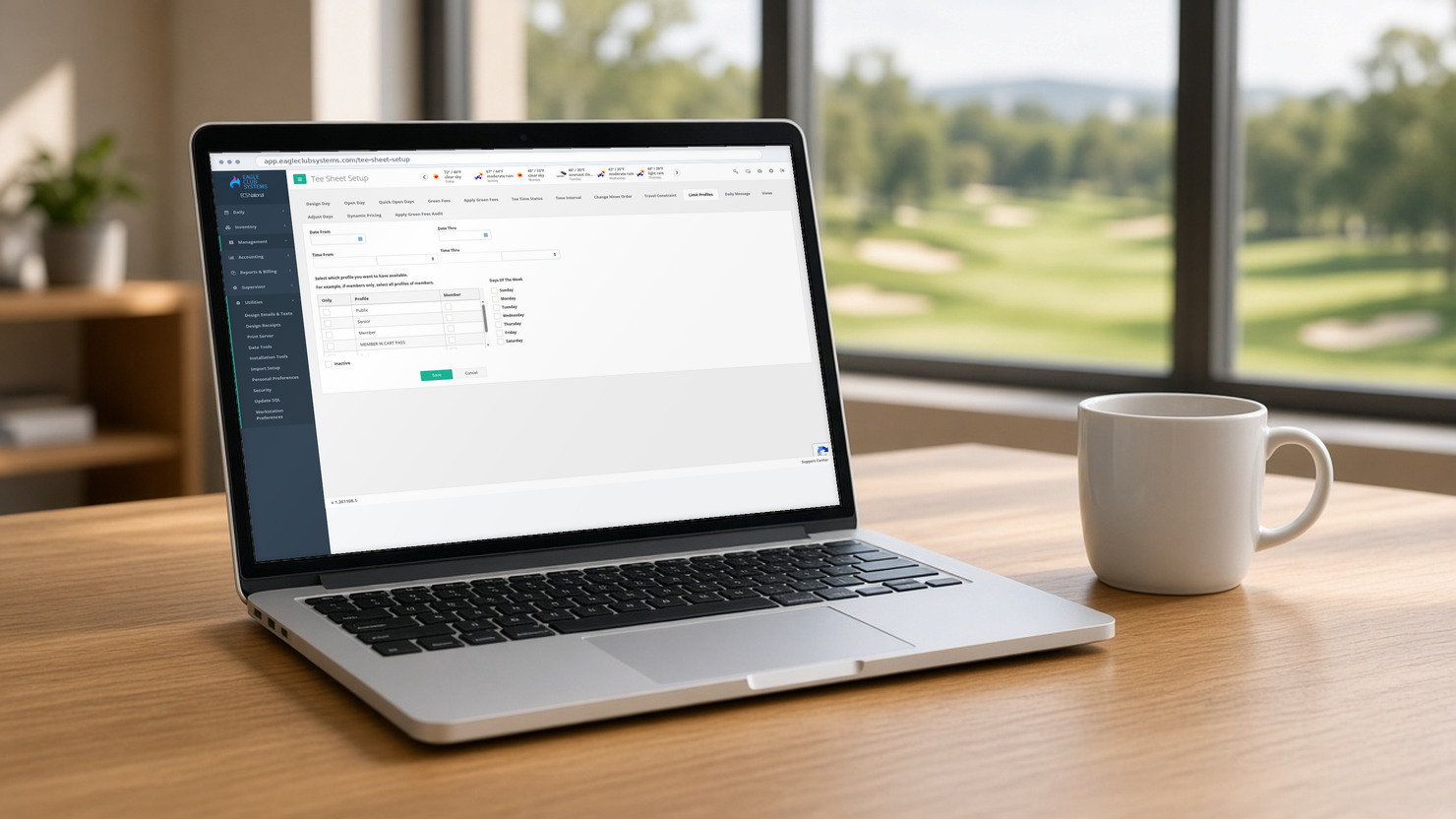
The tee sheet should let you limit a date or a time range by player profile, keep prepaid and pay-at-course reservations on the same book, and apply the correct member or guest rate at booking. Online booking has to honor those limits in real time. If the website can sell a members’ time to the open internet, the rule does not exist.
Eagle Club Systems includes booking rules, restrictions, and rate management, including Limit Profiles for selected member or public profiles, on the same cloud sheet as the desk. Dynamic pricing tools with Eagle Rev IQ are available when you want day-part or occupancy rules — with the same loyalty caution I cover in our dynamic pricing guide: public rates should not undercut what a membership is supposed to be worth.
Family billing, dues, and the grill ticket are one account
The other half of private club software is the bill. Dues, minimums, house accounts, and point-of-sale charges should post to the same household the membership office already maintains.
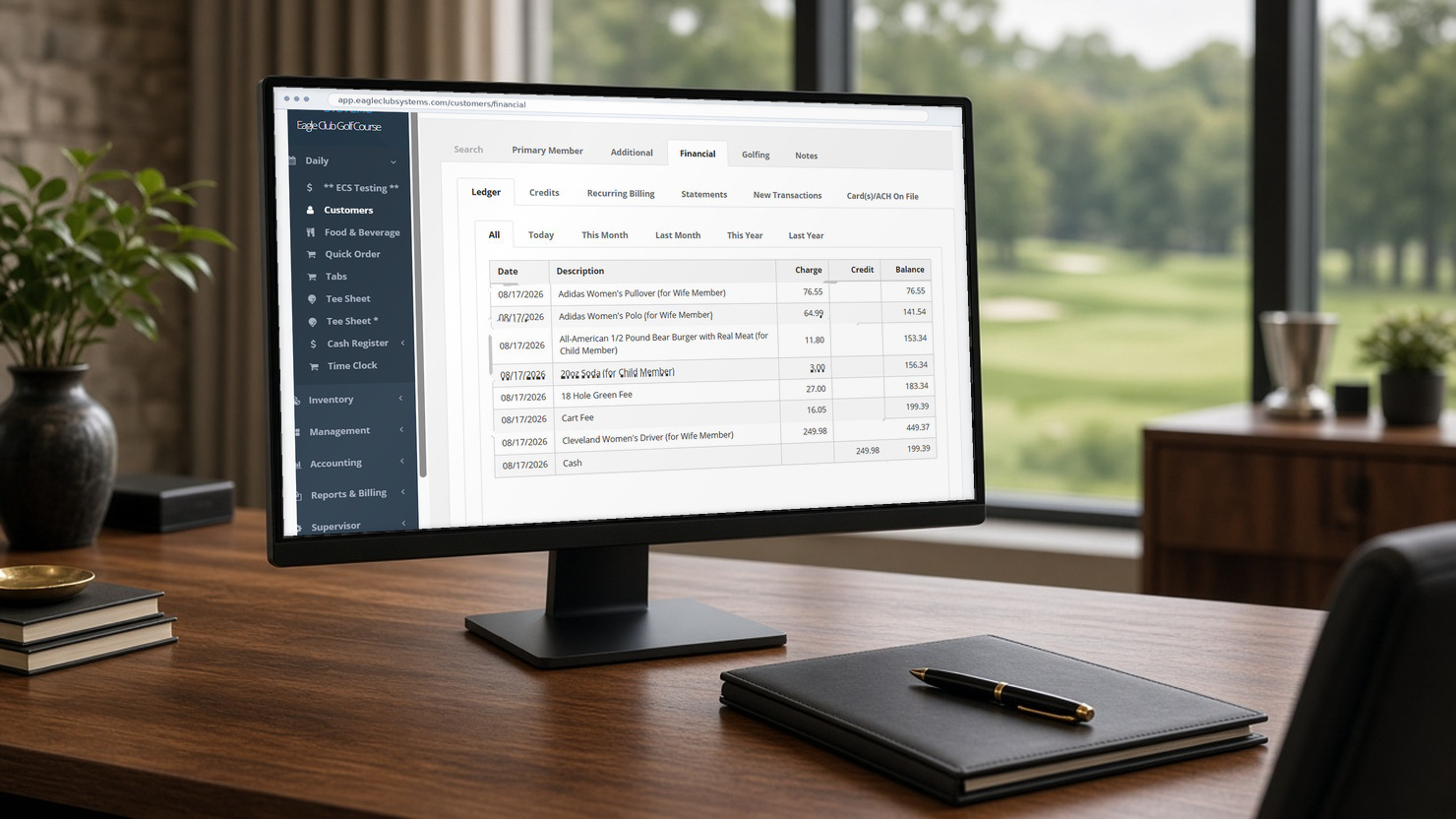
Membership billing in Eagle Club Systems supports plans and classifications, recurring dues, family or linked accounts, house accounts and minimums, and autopay on any day of the month — including member by member. ACH and card methods can be stored. Members can view statements and pay online, with or without the optional branded mobile app. For the operational playbook, see how to automate member billing.
The golf POS and food and beverage POS should charge that same record, whether the sale is in the shop, the grill, or on a beverage cart. If the restaurant uses a different register, month-end becomes a negotiation.
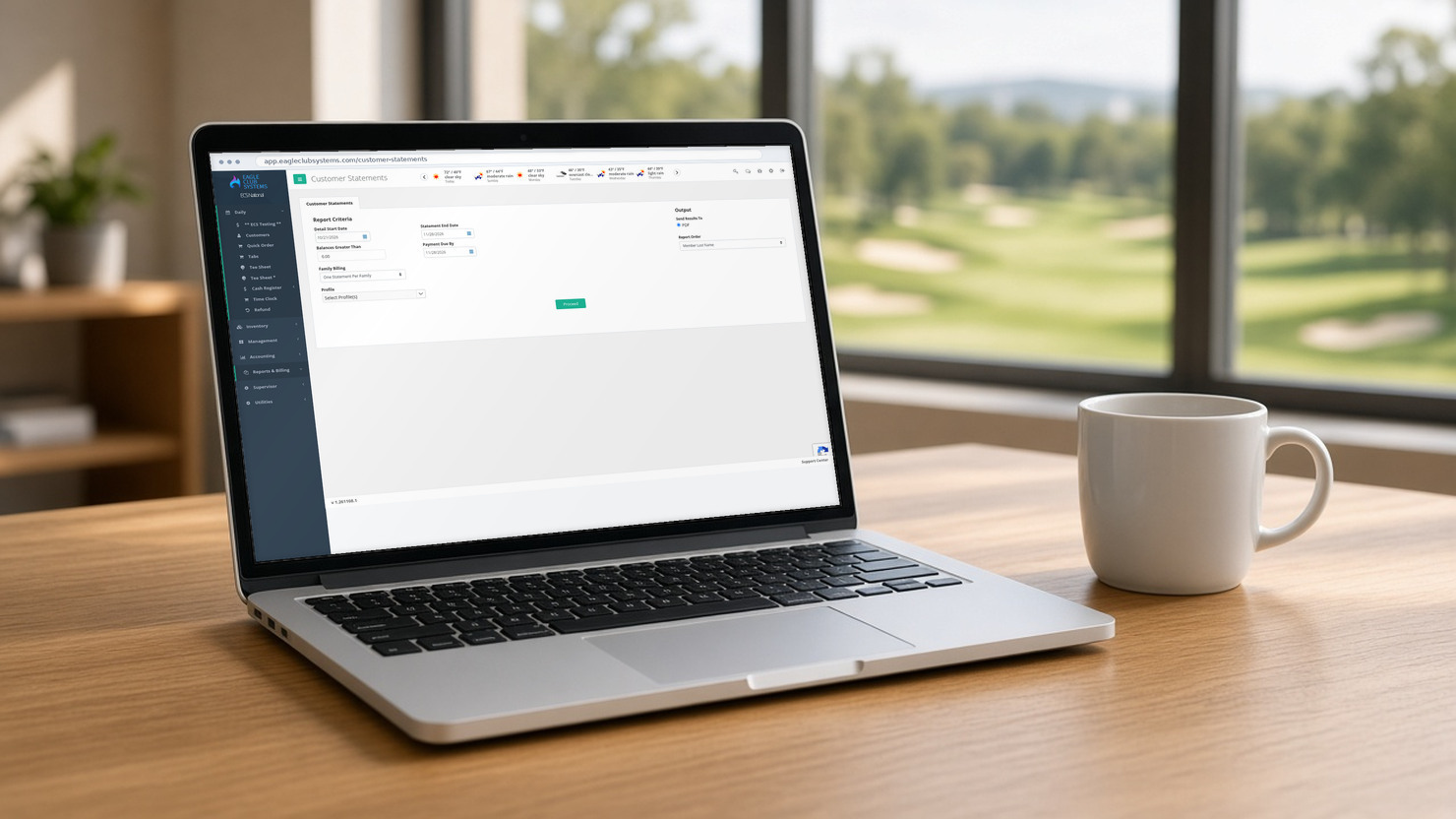
Statements should be runnable by date, due date, profile, and one-statement-per-family when that is the club’s policy. The office should not rebuild the list in a spreadsheet to get a batch out the door.
Reporting the board will actually accept
A general manager should be able to answer rounds, utilization, dues, outstanding balances, and F&B performance without waiting a week for a custom export. Golf course reporting in Eagle Club Systems is real-time across the tee sheet, POS, memberships, and food and beverage, with exports and connections to QuickBooks Online, QuickBooks Desktop, and Sage 50.
Marketing and CRM should start from who has been playing and who has gone quiet — useful for retention — and not from a stale list. Managed marketing is a paid add-on, not part of the software itself.
For a facility-wide buying framework that is not private-club specific, use the golf course management software buying guide. Two limits to put on the table in any demo: Eagle Club Systems is cloud-based and cannot run fully offline, and tournaments and leagues are handled through Golf Outing Guru and Golf League Guru alongside the tee sheet, rather than as a native events suite.
What to make the vendor prove
Bring your members’ morning rules, a family account, a sample statement, and a grill ticket.
- Close a morning window to members only, then try to book it as a public golfer online.
- Link a family member, post a shop or F&B charge, and show it on the household ledger and the statement.
- Set autopay on a day that is not the 1st, and show a stored card or ACH method.
- Run the reports a board packet would need: rounds, revenue, A/R, and F&B.
- Ask about conversion of members, balances, and future reservations, and about support hours on a weekend.
On Eagle Club Systems, implementation and data conversion are included at no charge, there are no long-term contracts, and most courses go live in under two weeks after data is provided. Support is U.S.-based, seven days a week, typically 6 a.m. to 10 p.m. We do not claim 24/7 coverage, and we do not publish a self-serve price table. Book a demo with your membership rules, and we will run those tests live.
Private club software should make members feel the rules are fair and the bill is accurate. If your current system requires a workaround for either one, you are not short on hospitality. You are short on a single member record.
FAQ
What should private golf club management software include?
Member booking rules that the public cannot bypass, family and household billing, recurring dues and autopay, POS and F&B charges on the same account, statements the office can send in a batch, and reporting a general manager can take to the board.
Is Eagle Club Systems built for private clubs, or only for daily-fee courses?
It is built for public, private, daily-fee, semi-private, and municipal courses, plus indoor simulator facilities. Private clubs use the same platform with member profiles, restricted tee times, family billing, and statements configured to their rules.
Can we keep members’ mornings closed to online public booking?
Yes, if limits live on the tee sheet the booking engine uses. Eagle Club Systems includes booking rules, restrictions, and Limit Profiles so a window can be held for selected member profiles.
Can family members charge to one household statement?
Yes. Family or linked accounts, house accounts, and minimums are part of membership billing, and POS charges can post to the same record.
Do private clubs have to sign a long-term software contract?
Eagle Club Systems states there are no long-term contracts. Confirm current terms in a written proposal. ---